


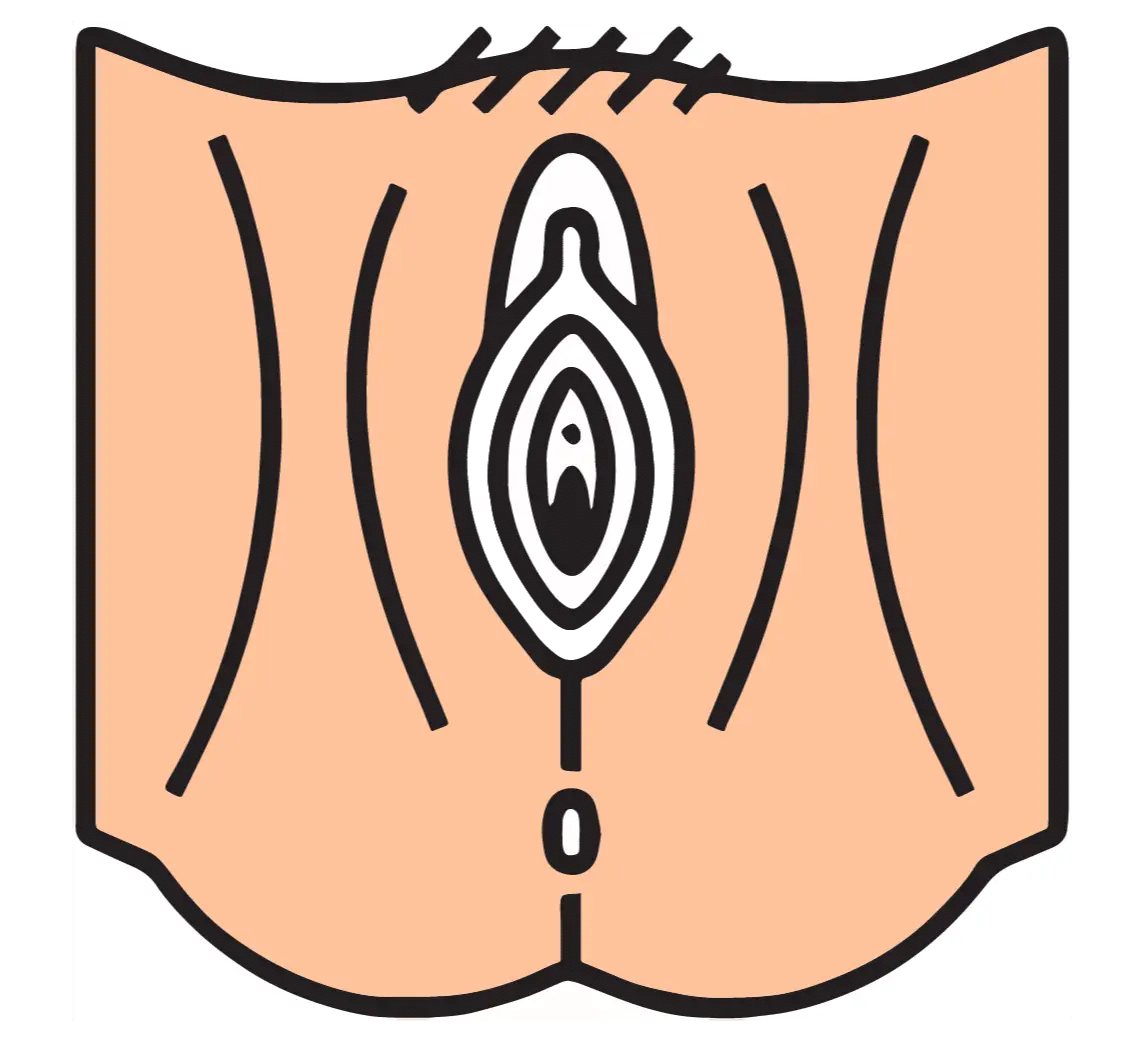
In general terms, perineoplasty is an aesthetic surgery performed to correct irregularities in the perineal area in women. It can be performed on its own, or together with other genital aesthetic procedures such as vaginal tightening. Commonly known as perineal aesthetics, this procedure helps eliminate protrusions, swellings, and sometimes sagging caused by excess tissue due to irregular healing in the perineum.
Irregularities in the perineal region can cause women to experience many different problems. Examples include reduced pleasure during sexual intercourse or pain during intercourse. With a single perineoplasty operation, all of these problems can be resolved.
We will answer all the questions you may have about how the surgery is performed, which techniques can be used, and the recovery process. But first, let’s explain where the area called the “perineum” is located.
What Is the Perineum and Where Is the Perineal Area?
First of all, it should be noted that the area treated with perineoplasty is the perineal region, also called the perineum. This is the area between the anus and the vagina. Although the length of the perineal area in women may vary, it can be said to range between 0.5 cm and 5 cm. The perineal area, which consists of different tissues such as skin, subcutaneous tissue, connective tissue, and muscle tissue, is also functionally important.
The perineum, which contains different tissues, is closely related to vaginal tightening or loosening, because the muscles and connective tissues that affect this condition are located in the perineum. This region supports the internal organs and also has an extremely important function such as facilitating the baby’s exit during vaginal birth.
How Many cm Should the Perineal Area Be in Women?
The area between the buttocks and the anus is the perineal area, and the width of this area differs in every woman. However, in general, the perineal area in women varies between 1 cm and 5 cm. In perineal aesthetics and perineal correction procedures, the operation is not performed according to a fixed ratio, but rather according to each patient’s anatomical structure. Aesthetic planning is carried out in order to obtain the best perineoplasty results.
What Is Perineal Aesthetics (Perineoplasty)?
Ideally, the perineal area should have a smooth and even structure. However, this is not always possible because the perineal region can become deformed especially during childbirth. Therefore, it can be said that perineoplasty is most often needed by women who have had vaginal delivery. In addition to correcting the perineum aesthetically, the surgery also helps eliminate excess skin folds in the area.
Perineoplasty, which is often performed in addition to other surgeries such as vaginoplasty and labioplasty, is not done only for aesthetic concerns. Irregularities in the perineum can also cause physical discomfort for women. Therefore, it can easily be said that it is a surgery that relieves both psychological and physiological difficulties.
Why Is Perineoplasty Necessary?
Perineoplasty, which is an aesthetic intervention, also eliminates problems related to the functional characteristics of the perineal area. When looking at the most common reasons, incisions made during childbirth to help the baby exit the birth canal more easily come to the fore. Perfect healing may not always occur in this incision area. Irregular healing can cause appearances such as folds, swellings, or excess skin in the perineum. In a sense, irregular healing may occur.
This is exactly where perineal aesthetics comes into play. When the functional problems of the area disappear, women get rid of problems that also affect their daily lives. A poorly healed perineal area does not only create an unpleasant appearance; it can also cause women to experience self-confidence issues, avoid wearing tight clothing, and feel uncomfortable and insecure in sexual life.
Although the operation aims to correct this physical appearance, eliminating other problems experienced by women is also one of the reasons why this surgery is performed.
Techniques Used in Perineoplasty Surgery
Today, the techniques used in perineoplasty include:
-
Removal of tissue in a rhomboid shape
-
Z-plasty
-
Removal of tissue in a triangular shape
-
Removal of tissue in an elliptical shape
Which technique will be applied is decided by your doctor according to the condition of the perineal area.
How Is Perineoplasty Performed?
Perineoplasty, which can be performed under general or local anesthesia, is usually completed in about 40–50 minutes. However, the duration of the surgery cannot be expected to be the same for every patient. Since irregularities in the perineum are not the same in every patient, the duration of the surgery may vary. In addition, whether another genital aesthetic procedure will be performed is another factor that determines the operation.
An incision is made in the perineal area to remove excess tissue and achieve a smooth, even appearance. Then the operation is completed by suturing. Discharge is usually done on the same day. In some patients, it may be necessary to intervene in connective and muscle tissue during the operation. In some patients, the goal is only to remove excess skin. For this reason, the intervention to be performed in perineal aesthetics surgery is planned individually.
Why Are Childbirth Incisions Made in the Perineum?
During childbirth, the baby must pass through the vaginal canal and come out. Sometimes, an incision must be made in the perineal region so that the baby can come out more easily. Otherwise, irregular tears may occur. The main purpose of childbirth incisions is to help the baby come out comfortably, and the secondary purpose is to prevent irregular tears in the perineal area. The healing process of irregular tears can be troublesome, and in this case perineoplasty may be applied. Healing of childbirth incisions may also not always be as expected. In such cases, this operation can be beneficial.
Perineoplasty Recovery Process
Let’s note that women generally do not experience very serious problems during the recovery period after perineoplasty. However, it is extremely important to take the doctor’s recommendations and warnings seriously. To have a smooth recovery, the following should be observed:
-
Sexual intercourse should be avoided for 4–6 weeks.
-
During this period, activities that strain the area, such as horseback riding, cycling, or motorcycle riding, should be avoided.
-
After perineoplasty, patients should avoid heavy sports movements and exercises that strain this area, because the area should not be forced.
-
Tampons should not be used for about 2 months; pads should be preferred.
-
Great care should be taken to use the doctor’s recommended medications regularly.
-
The area must remain dry and clean, and maximum attention should be paid to hygiene rules.
-
After surgery, there may be mild spotting-type bleeding from the area. Mild pain and soreness are also normal. These problems go away on their own in a short time.
-
Self-dissolving suture threads are used, and their dissolution time is around 10–15 days. After surgery, the patient does not need to have stitches removed.
-
If problems such as foul-smelling discharge, high fever, or heavy bleeding occur, the doctor should be informed immediately.
The Effect of Perineoplasty on Sexuality
Bringing the pelvic muscles located at the entrance of the vagina closer together allows the perineum to be lifted slightly with the perineoplasty operation. This increases contact between the penis and the sensitive area of the vagina during sexual intercourse. Therefore, perineal aesthetics is an intervention that supports women’s sexual pleasure.
What Should Be Considered After Perineoplasty?
After perineal aesthetics, it is normal for our patients to have a small amount of bleeding and discharge for a few days. To ensure hygiene, you should change your underwear as discharge and bleeding occur, and keep the area dry.
Due to anesthesia, our patients may experience nausea, dizziness, and headaches for a few days. These side effects usually pass within a maximum of two days after surgery.
Again, due to anesthesia and the operation, constipation complaints may occur, albeit rarely. Therefore, to prevent constipation, you should drink plenty of water and consume fiber-rich foods.
After perineoplasty surgery, our patients may have pain in the perineal area. The medications we recommend will relieve this pain.
Also, since perineal aesthetics is a surgical procedure, there is a risk of infection. For this reason, you should use the antibiotic medications prescribed by us regularly.
In Which Situations Should Those Who Undergo Perineoplasty Contact Us?
Some symptoms experienced after perineal aesthetics require intervention. Although rare, complications can develop after surgery. In such possible situations, you should contact us immediately. Especially those who have perineoplasty should inform us if they experience:
-
Foul-smelling vaginal discharge,
-
Fever and other signs of infection,
-
Heavy bleeding.
When Can Sexual Intercourse Be Resumed After Perineoplasty?
Sexual intercourse after perineal aesthetics is forbidden for approximately six weeks, because the time required for the perineal area to heal completely is six weeks. In addition, the surgical area must be fully healed in order not to experience pain during intercourse after perineoplasty.
Advantages of Perineoplasty Surgery
Every aesthetic procedure is actually performed to relieve people both physically and psychologically. After the operation, our patients’ self-confidence and sexual pleasure increase.
How Can Perineal Tear and Perineal Injury Be Recognized?
Perineal injury and perineal tears are common especially in women who have difficult vaginal deliveries and multiple normal births. However, childbirth is not the only cause.
Sexual intercourse, surgical vaginal operations, and infections can also cause perineal injury and tearing. Such problems can only be detected after a gynecological examination. The most well-known symptoms indicating a perineal tear or injury are:
-
Burning sensation while urinating,
-
Vaginal pain, soreness, and stinging sensation,
-
Vaginal bleeding outside the menstrual period,
-
Persistent vaginal discharge,
-
Vaginal itching,
-
Decreased sexual desire,
-
Vaginal tightness or looseness.
How Much Are Perineoplasty Prices in Ankara?
We cannot mention a fixed amount as the price of perineoplasty surgery that applies to every patient. Surgical planning is different for every patient, and factors such as the surgeon’s experience, the technique applied, and the type of anesthesia bring about differences in perineal aesthetics prices. You can make an appointment at our clinic and undergo an examination. According to the condition of the perineum, surgical planning is made and clear price information is provided to you.
Where Are Places That Perform Perineoplasty Aesthetics in Ankara?
You can call our clinic for perineoplasty surgery in Ankara. Perineal aesthetics surgery is frequently performed in Ankara. With this surgery, which has a very high success rate, you can also get rid of the problems you experience.
Benefits of Surgery to Correct Birth Scars
The perineoplasty operation, which aims to correct birth scars, helps women get rid of many problems. Some examples of this are:
-
Vaginal looseness
-
Vaginismus
-
Rectocele
-
Dyspareunia
-
Cystocele
-
Itching in the vaginal area
-
Severe pain during sexual intercourse
-
Discomfort caused by sagging skin in the perineal area
If you have other problems affecting the genital area, you should definitely consult your doctor. Because it may be possible to perform a combined operation together with perineoplasty. You can write your questions about this operation in the comment section below.
What Is Perineoplasty?
Perineoplasty is a gynecological surgery that focuses on the area between the vagina and the anus. This area is called the “perineum,” and its shape may be distorted due to tears during childbirth or sagging over time. Perineoplasty is performed to reshape and tighten this area.
At certain periods of women’s lives, especially in the postpartum period, changes may occur in the perineal area. These changes can affect sexual functions and urinary control. Perineoplasty helps eliminate these problems.
The main purpose of the surgery is to narrow and tighten the enlarged or torn perineal area. This procedure reduces the distance between the vaginal canal and the anus, enabling this area to gain a healthier appearance and function.
Benefits of Perineoplasty Surgery
Perineoplasty surgery has many benefits. Here are some important benefits:
-
Improvement of sexual functions: The surgery can increase sensations during sexual intercourse by reducing the distance between the vaginal canal and the anus.
-
Improvement of urinary control: Tightening of the perineal area can help reduce urinary incontinence problems.
-
Anatomical restoration: The surgery corrects anatomical changes that occur due to childbirth or aging and gives the area a more natural appearance.
-
Increased self-confidence: Many women report that their body image and self-confidence increase after perineoplasty.
-
Improved hygiene: A tightened perineal area provides better hygiene and reduces the risk of infection.
Suitable Candidates for Perineoplasty
Candidates suitable for perineoplasty surgery are generally found in the following situations:
-
Women who have severe tears or looseness in the perineal area after childbirth
-
Women who have sagging in the perineal area due to aging
-
Women who have difficulty achieving satisfaction during sexual intercourse
-
Women who have urinary incontinence problems
-
Women who are not satisfied with the appearance of the perineal area
However, each patient should be evaluated individually. Before surgery, you should discuss all risks, expectations, and alternative treatment options with your doctor.
Preoperative Preparation Process for Perineoplasty Surgery
Before perineoplasty surgery, a series of preparation steps are followed. These steps are:
-
Medical evaluation: Your doctor will review your health status and medical history. Blood tests, urinalysis, and other necessary tests may be performed.
-
Imaging: In some cases, imaging methods such as ultrasound or magnetic resonance imaging (MRI) may be used.
-
Stopping smoking and alcohol use: Smoking and alcohol use can negatively affect the healing process. Therefore, it is recommended to stop these habits before surgery.
-
Medication adjustment: Your doctor will inform you about the medications you should use before and after surgery.
-
Hygiene measures: Special hygiene measures will be taken to clean the surgical area and reduce the risk of infection.
-
Anesthesia preparation: You will be informed about the type of anesthesia to be used during surgery.
How Is Perineoplasty Surgery Performed?
Perineoplasty surgery is generally performed under general anesthesia. The surgical process includes the following steps:
-
Preparation: The surgical area is cleaned and prepared using sterile drapes.
-
Incisions: Your doctor starts the surgery by making small cuts in the perineal area.
-
Tissue stripping and reshaping: Loose and excess tissues are stripped and the perineal area is reshaped.
-
Suturing: The reshaped perineal area is sutured with non-absorbable sutures.
-
Closure: The surgical area is covered with sterile tapes.
The duration of the surgery generally varies between 1–2 hours, and after a few hours of observation in the hospital, you may be discharged.
Postoperative Recovery Process After Perineoplasty
The recovery process after perineoplasty may vary for each woman. However, in general, the following steps are followed:
-
First days: In the first few days, you may feel pain, swelling, and discomfort. Your doctor will prescribe painkillers and antibiotics.
-
Rest: During the first week, it is recommended to rest as much as possible and avoid heavy activities.
-
Hygiene: Keeping the surgical area clean and dry is very important. You should follow your doctor’s instructions.
-
Sexual intercourse and exercise: Generally, you should avoid sexual intercourse and heavy exercise for 6–8 weeks.
-
Follow-up visits: Your doctor will conduct regular check-ups to monitor the recovery process.
-
Full recovery: The full recovery time may vary, but generally takes 6–8 weeks.
Perineoplasty is a surgery that improves the quality of life for many women. Managing the pre- and postoperative process carefully will help you achieve successful results. By following your doctor’s instructions and being patient, you can benefit from the advantages of this surgery.
The information provided here is for informational purposes only and should not be considered as medical advice. Please consult with your doctor for personalized treatment recommendations and professional medical guidance.