


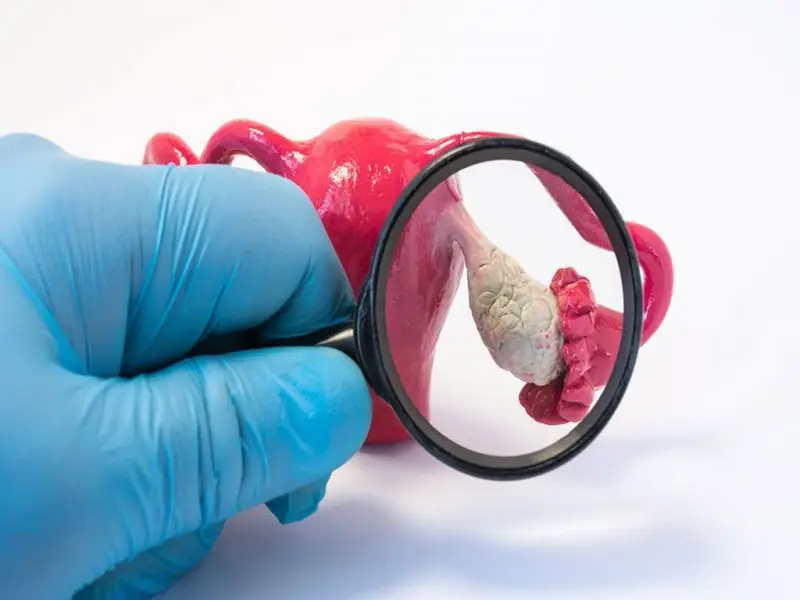
An ovarian cyst is a fluid-filled sac that forms inside the ovaries. Most women develop an ovarian cyst at least once in their lifetime. Cysts usually disappear on their own without causing any problems, but some may grow and lead to various health issues.
Ovarian cysts can be of many different types. The most common types are functional cysts, dermoid cysts, and endometrioma cysts. Functional cysts are the most common type and usually resolve spontaneously without requiring treatment. Dermoid cysts have a more complex structure and may require surgical intervention. Endometrioma cysts are seen in patients with endometriosis.
Ovarian cysts are generally asymptomatic, meaning they do not cause any symptoms. However, as they grow or rupture, various symptoms may occur. These symptoms include abdominal pain, a feeling of fullness, and frequent urination.
Symptoms of Ovarian Cysts
Ovarian cysts usually do not cause any symptoms. However, in some cases, the following symptoms may be observed:
-
Abdominal pain or discomfort
-
Bloating or a feeling of fullness
-
Frequent need to urinate
-
Loss of appetite
-
Nausea and vomiting
-
Pain during sexual intercourse
-
Abnormal vaginal bleeding
These symptoms may vary depending on the size, location, and rupture status of the cyst. Larger cysts may cause more symptoms. In addition, in the case of cyst rupture, emergency situations such as severe abdominal pain and internal bleeding may occur.
Causes of Ovarian Cysts
Although the exact cause of ovarian cysts is not known, the following factors are thought to increase the risk:
-
Hormonal changes: Hormonal fluctuations may cause ovarian cysts to form. For example, hormonal changes may occur during the menstrual cycle or while using birth control pills.
-
Polycystic ovary syndrome (PCOS): This syndrome causes the formation of many small cysts in the ovaries.
-
Endometriosis: The spread of the uterine lining tissue outside the uterus may lead to cyst formation in the ovaries.
-
Pregnancy: Functional cysts formed during pregnancy are commonly seen.
-
Age: Ovarian cysts are more common in young and middle-aged women.
-
Family history: Ovarian cysts may be more common in some families.
-
Obesity: Ovarian cysts are more common in women with a high body mass index.
In addition to these risk factors, some medications are also thought to contribute to the development of ovarian cysts.
Diagnosis of Ovarian Cysts
Various tests are performed to diagnose ovarian cysts:
-
Physical examination: Your doctor evaluates the presence of a cyst by manually examining the abdominal area.
-
Imaging tests: Tests such as ultrasound, computed tomography (CT), or magnetic resonance imaging (MRI) provide more detailed information about the cyst.
-
Blood tests: Blood tests such as the CA-125 tumor marker may help determine the type of cyst.
-
Laparoscopy: Imaging and biopsy can be performed by making a small incision in the abdominal area.
As a result of these examinations, information is obtained about the type, size, location, and possible complications of the cyst. Accordingly, the most appropriate treatment option can be determined.
Ovarian Cyst Treatment Options
The treatment of ovarian cysts varies depending on the type and size of the cyst, the patient’s age, and other health conditions. The following treatment options may be applied:
-
Observation: Small and asymptomatic cysts are usually monitored with regular follow-up without requiring treatment.
-
Hormonal treatment: Birth control pills or progesterone medications may prevent cyst formation.
-
Surgical treatment: Large, complicated, or symptomatic cysts may be surgically removed. Laparoscopic methods are often preferred.
-
Fertility-preserving surgery: In young patients, ovarian tissue may be preserved while the cyst is surgically removed.
-
Radical surgery: In some cases, removal of the entire ovary or removal of the uterus and ovaries together (hysterectomy) may be required.
The choice of treatment is determined by the doctor, taking into account the patient’s symptoms, cyst characteristics, and future fertility plans. With regular follow-up and appropriate treatment, the vast majority of ovarian cysts can be managed successfully.
The information provided here is for informational purposes only and should not be considered as medical advice. Please consult with your doctor for personalized treatment recommendations and professional medical guidance.