


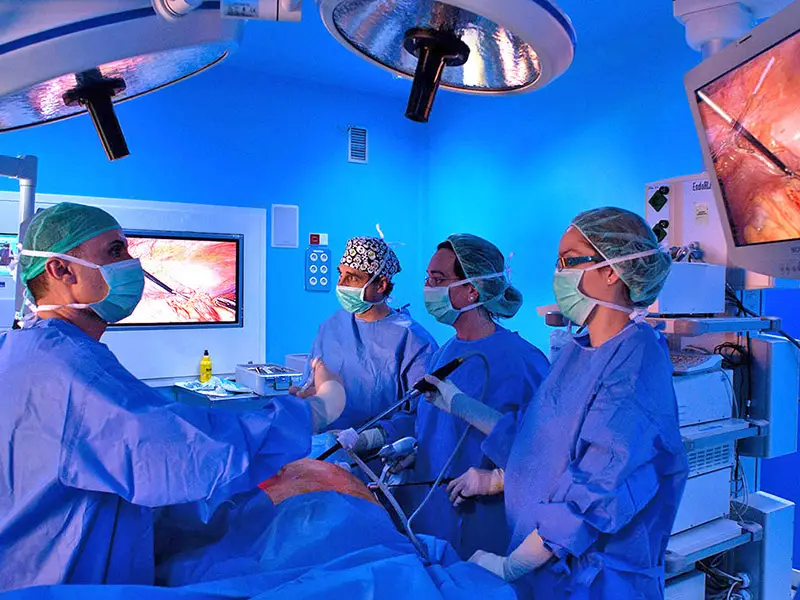
Gynecological laparoscopic surgery is a minimally invasive surgical method used for the examination and treatment of the female reproductive system and other organs in the abdominal cavity. This technique is performed through small incisions made in the abdominal wall and uses a special tube called a laparoscope. The laparoscope contains a camera and a light source, allowing the surgeon to visualize the abdominal cavity and perform the necessary interventions.
Gynecological laparoscopic surgery can be used in the treatment of many gynecological conditions. These include cysts, fibroids, endometriosis, pelvic pain, abnormal uterine bleeding, and infertility. In addition, procedures such as removal of the uterus (hysterectomy), tubal ligation, and removal of ovarian cysts can also be performed laparoscopically.
Gynecological laparoscopic surgery is less invasive compared to traditional open surgery and offers advantages such as faster recovery time, less pain, smaller scars, and shorter hospital stays. However, laparoscopic surgery may not be suitable in every case, and the surgeon’s evaluation is important.
Advantages of Gynecological Laparoscopic Surgery
Gynecological laparoscopic surgery offers many advantages compared to traditional open surgery. These advantages include:
-
Smaller incisions and less tissue trauma
-
Less pain and a faster recovery process
-
Shorter hospital stay
-
Lower risk of infection
-
Better cosmetic results (smaller and less noticeable scars)
-
Earlier return to daily activities
-
Less blood loss and a lower need for blood transfusion
These advantages allow patients to return to their normal lives more quickly and make the overall recovery process easier.
Techniques Used in Gynecological Laparoscopic Surgery
Various techniques are used during gynecological laparoscopic surgery. These include:
-
Laparoscopic Hysterectomy: Laparoscopic removal of the uterus (hysterectomy).
-
Laparoscopic Cystectomy: Laparoscopic removal of ovarian cysts.
-
Laparoscopic Myomectomy: Laparoscopic removal of uterine fibroids.
-
Laparoscopic Endometriosis Surgery: Laparoscopic treatment of endometriosis lesions.
-
Laparoscopic Tubal Ligation: Laparoscopic procedure for tying the fallopian tubes.
-
Laparoscopic Pelvic Surgeries: Other surgical interventions involving the pelvic organs performed laparoscopically.
These techniques are adapted to each individual case and are selected based on the surgeon’s experience and the patient’s condition.
Suitable Candidates for Gynecological Laparoscopic Surgery
Gynecological laparoscopic surgery can be used in the treatment of many gynecological conditions. However, it may not be suitable for every patient. Suitable candidates for gynecological laparoscopic surgery generally include:
-
Patients with gynecological problems such as fibroids, cysts, endometriosis, or pelvic pain.
-
Patients with abnormal uterine bleeding or infertility problems.
-
Patients who require hysterectomy (removal of the uterus) or tubal ligation (tying of the tubes).
-
Patients who are in good general health and have a low surgical risk.
-
Patients who do not prefer open surgery or who want a faster recovery process.
Nevertheless, each patient’s condition should be evaluated individually. The surgeon determines the most appropriate treatment method by considering the patient’s medical history, general health status, and the characteristics of the gynecological condition.
Recovery Process After Gynecological Laparoscopic Surgery
The recovery process after gynecological laparoscopic surgery is generally faster and more comfortable compared to traditional open surgery. However, the recovery process may vary from patient to patient. In general, the recovery process is as follows:
-
Hospital Stay: After laparoscopic surgery, patients usually stay in the hospital for a few hours or one night. This duration depends on the complexity of the procedure and the patient’s overall condition.
-
Pain Management: Pain after surgery is normal and is usually mild to moderate. Doctors prescribe painkillers to control pain.
-
Activity Restrictions: Avoiding heavy activities is recommended for the first few days. Light walking and daily activities are usually possible within a few days.
-
Incision Care: It is important to keep the incision areas clean and dry. Doctors provide instructions on wound care and infection prevention.
-
Follow-up Visits: Patients usually visit their doctor for follow-up appointments a few weeks after surgery. During these visits, the recovery process is evaluated and checked for any complications.
-
Full Recovery Time: The full recovery period varies depending on the complexity of the procedure, but it generally ranges from a few weeks to a few months.
When patients follow their doctor’s instructions and get adequate rest, the recovery process after gynecological laparoscopic surgery usually proceeds smoothly.
The information provided here is for informational purposes only and should not be considered as medical advice. Please consult with your doctor for personalized treatment recommendations and professional medical guidance.