


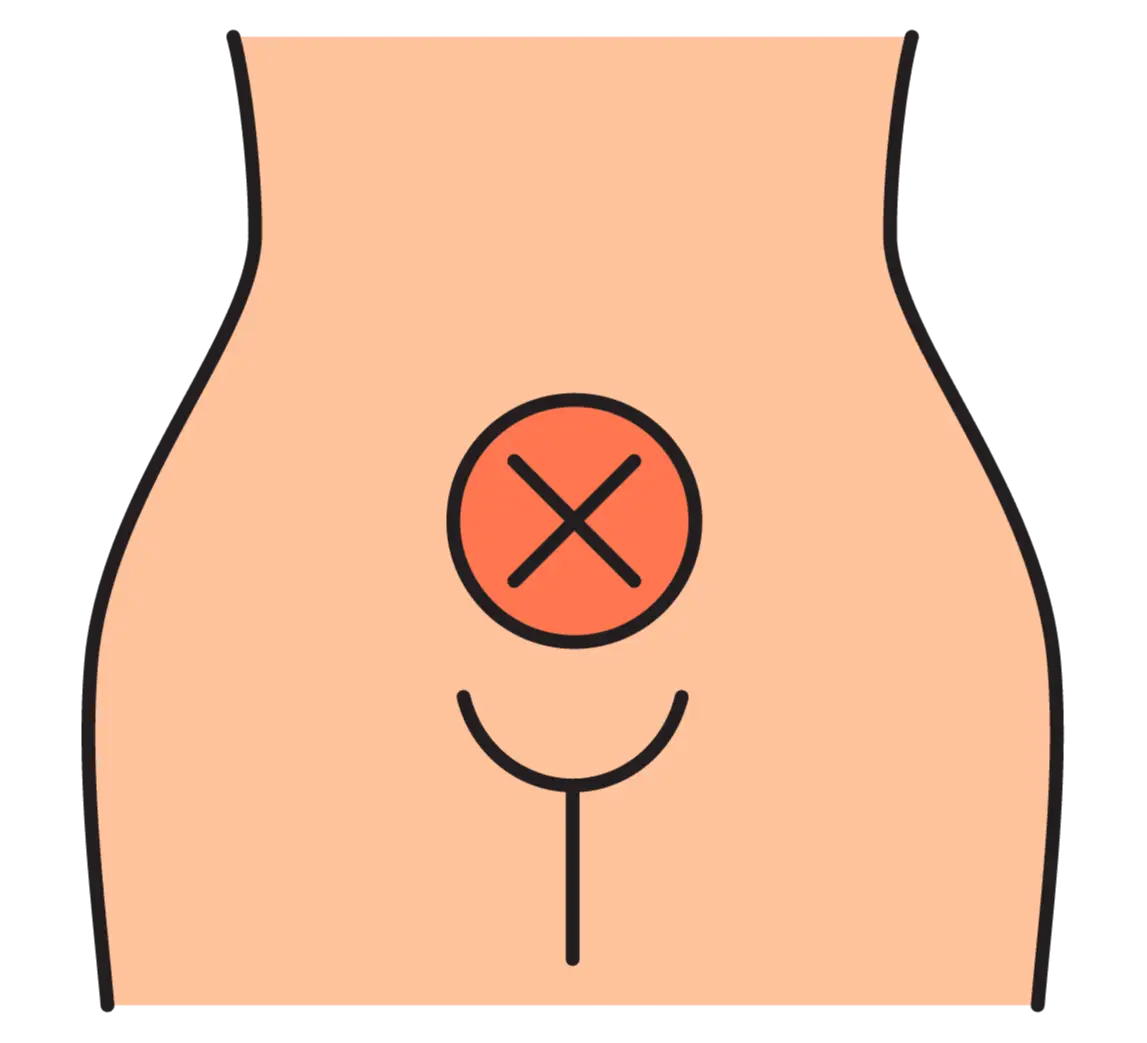
Commonly referred to by the public as uterine closure or uterine adhesions, genital adhesions are medically called labial fusion. Labial fusion treatment is generally possible through surgical treatment. It is a condition that can occur at almost any age and in most women. In our patients with genital adhesions, there are often complaints such as pain and discomfort during sexual intercourse or while urinating. For this reason, labial fusion is an important genital area condition that should be treated and is treatable.
What Is Labial Fusion?
Labial fusion, which our patients refer to as uterine closure, is the adhesion of the inner labia to each other in the genital area. It also has nothing to do with uterine closure. This condition, which mostly occurs congenitally, may be seen in our patients as a complete or partial closure of the inner labia. This condition can occur in both children and all adult women.
Treatment of labial fusion is possible after the examination and tests performed by us.
Why Does Labial Fusion (Genital Adhesion) Occur?
Although the causes of labial fusion in children are not exactly known, it is generally assumed to occur due to a deficiency of the estrogen hormone passed from mother to baby.
This condition is more commonly encountered in young women. The causes of labial fusion in adults, and especially after the menopause period, are also due to estrogen deficiency.
Especially hormonal imbalances during menopause may cause the tissues between the labia to weaken, and for this reason, fusion of the inner labia may be observed. In addition to estrogen deficiency, reasons such as infections in the vagina or urinary tract, the use of gels and soaps that are not suitable for the genital area, or the use of wet wipes for genital hygiene may also be among the causes of this condition.
In addition to all these, labial fusion can also occur due to lichen sclerosus.
What Are the Symptoms of Labial Fusion?
This condition is generally a disorder that most women cannot notice on their own. However, in later periods, symptoms and complaints of labial fusion may include the following:
-
Symptoms such as vaginal pain, itching, bleeding, and discharge,
-
Difficulty or trouble while urinating,
-
Vaginal and urinary tract infections,
-
Orgasm problems during sexual intercourse,
-
And also pains experienced during sexual intercourse called dyspareunia.
In labial fusion patients, complete genital adhesion can also occur in advanced stages. In such cases, sexual intercourse and menstrual bleeding (period) may not be possible.
How Is Labial Fusion Diagnosed?
With the gynecological examination performed by us, the adhesions in the inner labia and the presence or absence of labial fusion can be determined. Even during the examination, it can be understood at which stage the adhesion in the inner labia is. If present, adhesions covering the clitoris or inside the vagina can also be observed during the examination.
How Is Labial Fusion Treatment Performed?
For the treatment of these adhesions occurring in the genital area, first, the stage of the condition, the patient’s needs, and complaints are determined. For the treatment of adhesions seen at mild and moderate stages, medical treatment is applied first. Along with this treatment, the inner labia that have adhered to each other are also manually separated and opened.
However, if we diagnose that labial fusion is at an advanced level in the genital area, surgical intervention is required in such cases. When surgery is required, the operation is performed under local or general anesthesia. In addition, after the procedure, local estrogen application may also be necessary. In such cases, regularly carrying out the applications and recommendations specified by us can also prevent the condition from recurring in later periods.
What Should Be Considered After Labial Fusion Treatment?
What our patients should especially pay attention to after labial fusion treatment are as follows:
-
Following the recommendations specified by us after treatment can ensure complete recovery and prevent recurrence.
-
Regularly doing the exercises recommended by us may be a solution to prevent recurrence of labial fusion. It is also effective in the recovery process after labial fusion.
-
Genital hygiene must be performed correctly after treatment, in the way we recommend.
-
Regular follow-up check-ups must be performed by us after treatment. These check-ups are necessary for us to observe the post-treatment recovery process.
Does Labial Fusion Recur?
Yes, after labial fusion treatment is completed, it can recur at a rate of about 30% or 35%. Regular follow-ups should be performed both during the recovery period after treatment and afterward. Thanks to these check-ups, recurrence of the condition can also be prevented.
How Is Labial Fusion Opened?
In some of our patients, a surgical operation may be required to open the adhesion in the inner labia. The operation is mostly performed under local anesthesia. During the surgery, the labial tissue adhered to each other in the inner labia is cut, and thus separation of the inner labia from each other is achieved.
Which Creams Are Used to Treat Labial Fusion?
In our patients in whom we diagnose advanced-level labial fusion, the condition generally needs to be treated with surgery. However, after the procedure, it may also be necessary to use creams that we will prescribe. In mild or advanced labial fusion, a gynecological examination is important in order to determine the treatment method we will apply to the patient first. The condition and severity of the disorder are determining factors for its treatment.
Labial Fusion Treatment Prices in Ankara
Labial fusion treatment prices are determined according to the treatment method we will apply, only after we put our patients through preliminary tests and make a diagnosis. For labial fusion treatment in Ankara, you can call our practice to make an appointment and request that the preliminary examinations be performed by us.
What Is Labial Fusion?
Labial fusion is the adhesion of the vaginal lips (labia minora) to each other congenitally or due to various reasons. This condition is generally seen congenitally, but it can also occur due to various reasons such as trauma, infection, or hormonal changes. Vaginal fusion can cause discomfort, pain, and functional problems in the genital area.
Labial fusion is a condition that changes the anatomical structure of the external genital organs. Closure of the vaginal lips can lead to narrowing and even obstruction of the vaginal opening. This can cause problems with urination, sexual intercourse, and other gynecological examinations.
Labial fusion can directly affect women’s sexual and reproductive health. Therefore, early diagnosis and appropriate treatment are very important. Since vaginal fusion is generally perceived as a very embarrassing condition among women, it is very important to contact a specialist doctor regarding this issue.
Why Does Labial Fusion Occur?
Labial fusion can occur for various reasons. The main causes are as follows:
-
Congenital Causes: In some women, the vaginal lips may be congenitally fused. This condition results from an abnormality occurring during fetal development.
-
Infections: Recurrent vaginal infections may cause inflammation and adhesion of the vaginal lips.
-
Traumas: Injuries occurring during childbirth or for other reasons may lead to the vaginal lips adhering to each other.
-
Hormonal Changes: Menopause, pregnancy, or other hormonal changes may cause thinning of vaginal tissue and adhesions.
-
Genetic Factors: In some women, vaginal fusion may be seen due to a genetic predisposition inherited from the family.
-
Sexual Trauma: Sexual abuse or other traumatic events may cause the vaginal lips to adhere.
The cause of vaginal fusion may vary in each woman. For an accurate diagnosis and appropriate treatment, it is very important to contact a specialist doctor.
Labial Fusion Symptoms and Diagnosis
The most prominent symptoms of vaginal fusion are as follows:
-
A feeling of narrowing or blockage at the vaginal opening
-
Pain or difficulty while urinating
-
Pain or difficulty during sexual intercourse
-
Difficulty in gynecological examinations
-
Recurrent vaginal infections
-
Pain or bleeding during the menstrual period
The diagnosis of vaginal fusion is primarily made through a detailed physical examination. The doctor evaluates the adhesion of the vaginal lips by examining the genital area. In some cases, ultrasound or imaging tests may also be performed.
Vaginal fusion can be confused with other genital disorders. Therefore, it is important to consult an experienced gynecologist or plastic surgeon for an accurate diagnosis. Early diagnosis plays a critical role in determining appropriate treatment options.
Labial Fusion Treatment Methods
Treatment of vaginal fusion is determined according to the person’s symptoms, severity, and underlying cause. Treatment options are as follows:
-
Conservative Treatment:
-
Topical estrogen creams: Provide softening and separation of the vaginal lips.
-
Vaginal dilators: Devices used to widen the vaginal opening.
-
Physical therapies: Vaginal massage and exercises.
-
-
Surgical Treatment:
-
Vaginal fusion surgery: Surgical separation of the vaginal lips.
-
Laser treatment: Separation of the vaginal lips with a laser method.
-
Reconstructive surgery: Vaginal repair surgery for severe cases.
-
Conservative treatments may be effective in mild cases. However, in cases where symptoms are severe or conservative methods are unsuccessful, surgical treatment may be necessary.
Surgical treatment is performed by an experienced gynecologist or plastic surgeon. The operation is usually performed under local anesthesia and is completed in a short time. The postoperative recovery process may vary from person to person.
Labial Fusion Surgery and Aftercare
Vaginal fusion surgery is performed by an experienced gynecologist. The operation is usually performed under local anesthesia and takes 30–60 minutes.
During the operation, the doctor surgically separates the fused areas of the vaginal lips. If necessary, additional tissue repair may also be performed. After the operation, antibiotic and healing-accelerating creams are applied to the vaginal area.
The recovery process may vary from person to person. Generally, pain and swelling decrease within 2–3 weeks. Full recovery may take 4–6 weeks. During this period, it is important to avoid sexual intercourse and tampon use.
After the operation, regular check-ups and follow-up are very important. The doctor closely monitors the healing process and, if necessary, may recommend additional treatments. After a successful operation, normal function and appearance are provided in women’s genital area.
The information provided here is for informational purposes only and should not be considered as medical advice. Please consult with your doctor for personalized treatment recommendations and professional medical guidance.